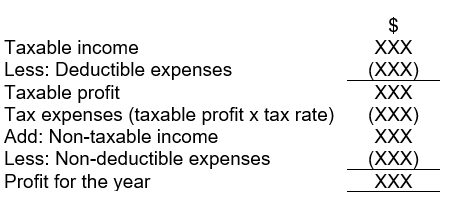
Part 1 - https://tysonspeaks.blogspot.com/2019/08/ias-12-how-to-determine-tax-base-part-1.html
Part 2 - https://tysonspeaks.blogspot.com/2019/09/ias-12-how-to-determine-tax-base-part-2.html
For Part 3, I am going to discuss about how to determine the tax base for liability as well as tax base for some specific scenarios involving the accounting standards in the Financial Reporting (FR) paper of ACCA.
Tax Base of Liability

Before we go into the details, let's look again at the definition of tax base of liability according to IAS 12:
The tax base of a liability is its carrying amount, less any amount that will be deductible for tax purposes in respect of that liability in future periods. In the case of revenue which is received in advance, the tax base of the resulting liability is its carrying amount, less any amount of the revenue that will not be taxable in future periods.
In general, there are two points:
(a) Generally, the tax base of the liability will be equal to its carrying amount unless the liability represents an expense which will only be deductible in the future when it is paid. In this case, the tax base is the carrying amount minus the amount that will be deductible in the future (e.g accrued expenses in which deduction is given in the future when the liability is paid - deduction on cash basis).
(b) If the liability represents an income received in advance, then the tax base is the carrying amount minus any revenue that is not taxable in the future (e.g. an income received in advance which is taxed in this year on receipt basis. This income will not be taxable in the future).
You will understand more after going through the following illustrations:
1. Trade Payables

The entity incurs an expense of $100 on credit. The accounting double entry is:
Dr Expenses (SOPL) $100
Cr Trade payables $100
In this case, the carrying amount of the liability is $100.
Tax treatment: Assuming that the tax rule provides that such expense is deductible on an accrual basis (i.e. deduction is given even though the entity has not paid for the expense).
The imaginary tax double entry in the imaginary tax financial statements will be:
Dr Deductible expenses $100
Cr Trade payables $100
As we can see from the above, the tax base of the liability is also $100 because $100 is deductible in this year.
Since the CA and TB are the same, there will be no deferred tax because the accounting rule and tax rule are the same.
Note: Referring back to the definition, as none of the $100 liability is deductible in the future (the full $100 has already been deducted in the current year), the tax base is equal to its carrying amount of $100.
2. Accrued Expenses Which Is Deducted on Cash Basis

An entity has accrued water and electricity expenses of $100 for the month of December. Such expense has not been paid by year end. The accounting double entry is:
Dr Expenses (SOPL) $100
Cr Accrued expenses $100
In this case, the carrying amount of the liability is $100.
Tax treatment: Assuming that tax rule provides that the deduction for such expenses can only be made when the entity has paid for the expenses.
As the entity has not paid for the expenses, there will be no tax double entry. Accordingly, it follows that there is no tax base because the expense is not deductible in this year.
As such, CA = $100 and TB = $0. As CA > TB and this is a liability, this represents a DTD of $100.
Reason for DTD: The entity will pay higher tax this year because deduction is not given this year. However, the entity will pay lesser tax in the future when deduction is given (hence DTD).
Note: Referring back to the definition, as the $100 liability will only be deducted in the future, the tax base is equal to its carrying amount ($100) less the amount that will be deductible in the future ($100). This will result in tax base to be equal to zero ($100 - $100).
3. Deferred Income Which Is Taxed on Cash / Receipt Basis

An entity receives $100 advance payment for services to be rendered in the future. As the performance obligation has not been satisfied, according to IFRS 15 Revenue from Contracts with Customers, revenue cannot be recognised. Instead, a deferred revenue (liability) should be recognised as follows:
Dr Bank $100
Cr Deferred revenue (liability) $100
In this case, the carrying amount of the liability is $100.
Tax treatment: Assuming that the tax rule mentions that the income will be taxed if the entity has received the income.
As the income is subject to tax in this year (since the entity has received the income), the imaginary tax double entry in the imaginary tax financial statements will be as follows:
Dr Bank $100
Cr Taxable income $100
In other words, in the tax SOFP, there will be no liability because the income has already been taxed this year. As such, tax base is equal to zero.
As CA = $100 and TB = 0 and this is a liability, there will be a DTD of $100 since CA > TB.
Reason for DTD: The entity will pay more tax in this year because the deferred income is subject to tax in this year. However, the entity need not pay tax again in the future (hence the future tax is lesser and it is DTD).
Note: Referring back to the definition, as the $100 income received in advance has already been taxed in this year, there will be no tax to be paid in the future. As such the tax base is the carrying amount ($100) less the revenue that will not be taxable in the future ($100). This will result in the tax base to be equal to $0 ($100 - $100).
4. Deferred Income Which Is Taxed in the Future
Assuming that the scenario is the same as scenario no.3 above, except that the tax treatment is that the income will not be taxed now, but it will only be taxed in the future when services are rendered.
In this case, the imaginary tax double entry in the imaginary tax financial statements will be similar to the accounting double entry:
Dr Bank $100
Cr Deferred revenue (liability) $100
As such, tax base of the liability is equal to $100 because we have not paid the tax.
As CA = $100 and TB = $100, it follows that there is no deferred tax. This is because the accounting rule and tax rule are the same.
Note: Referring back to the definition, as the $100 income received in advance will be taxed in the future, the tax base is the carrying amount ($100) less the revenue that will not be taxable in the future ($0). This will result in the tax base to be equal to $100 ($100 - $0).
5. Loan Payable

An entity borrowed $100 from the bank. The accounting double entry is as follows:
Dr Bank $100
Cr Loan payable $100
As such, the carrying amount of the liability is $100.
Tax treatment: When the entity receives the borrowing from the bank, there is no tax implication. When the entity makes repayment of loan to the bank, there is also no tax implication.
The imaginary tax double entry in the imaginary tax financial statements will be similar to the accounting double entry:
Dr Bank $100
Cr Loan payable $100
As the CA and TB are the same, it follows that there is no deferred tax. This is because the accounting rule and tax rule are the same.
Note: Referring back to the definition, as the $100 liability will not be deductible in the future, the tax base is equal to its carrying amount ($100) less the amount that will be deductible in the future ($0). This will result in tax base to be equal to $100 ($100 - $0).
6. Accrued Fines and Penalties

An entity accrues fines and penalties amounting to $100. The accounting double entry is as follows:
Dr Expenses (SOPL) $100
Cr Accrued fines and penalties $100
As such, the carrying amount of the liability is $100.
Tax treatment: Assuming that fines and penalties are not deductible for tax purposes.
The imaginary tax double entry in the imaginary tax financial statements will be similar to the accounting double entry:
Dr Non-deductible expenses $100
Cr Accrued fines and penalties $100
As such, the tax base of the liability is also $100.
As the CA and TB are the same, it follows that there is no deferred tax.
Note: Referring back to the definition, as the $100 liability will not be deductible in the future, the tax base is equal to its carrying amount ($100) less the amount that will be deductible in the future ($0). This will result in tax base to be equal to $100 ($100 - $0).
Alternatively, you can also argue that as fines and penalties are not deductible, the difference represents a permanent difference and deferred tax should be ignored. Both analysis will result in no deferred tax calculation.
There you go! This is the idea of how do we determine tax base for liability.
Next, I am going to cover about some specific scenarios involving the accounting standards in the Financial Reporting (FR) paper of ACCA.
Specific Scenarios
In this part, I will cover some scenarios involving the following:
1. Unutilised tax losses or unutilised tax credits
2. Leasing (IFRS 16)
3. Convertible loan note (IAS 32)
1. Unutilised Tax Losses / Unutilised Tax Credits
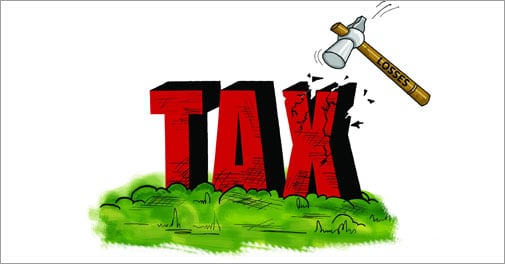
Unutilised tax losses (in Malaysia, this is known as unabsorbed business losses) refer to the tax losses that can be carried forward to the future so that it can be used to offset against taxable income that an entity will earn in the future. In other words, future tax can be reduced by these unutilised tax losses.
As the entity will pay lesser tax in the future, unutilised tax losses will result in deferred tax asset (DTA).
For example, if an entity is having unutilised tax losses of $100,000 and the tax rate is 25%, there will DTA of $25,000 ($100,000 x 25%).
However, do take note that paragraph 34 of IAS 12 mentions that such deferred tax asset can be recognised "to the extent that it is probable that future taxable profit will be available against which the unused tax losses and unused tax credits can be utilised."
In other words, using the same example as above, if the entity only expects that it can earn $70,000 taxable profit in the future, the entity can only recognise DTA of $21,000 ($50,000 x 25%) instead of the full $25,000 DTA.
The remaining DTA of $4,000 ($25,000 - $21,000) will not be recognised because the entity is not able to earn the extra $30,000. In other words, the entity will not be able to use the tax losses of $30,000 because the entity cannot earn the extra $30,000. As such, the DTA of $4,000 will only be disclosed in the notes to the financial statements.
2. Leasing

Under IFRS 16, a lessee (an entity who lease an asset) will recognise right-of-use asset as well as lease liability (the detailed accounting treatment under IFRS 16 is not covered in this post). Let's just say:
Right-of-use asset - $100
Lease liability - $90
Net CA of lease (asset) - $10
Tax treatment: Assuming that the tax rule provides that lease rental is treated as a deductible expense.
The imaginary tax double entry for the lease rental in the imaginary tax financial statements will be as follows:
Dr Deductible expenses $100
Cr Bank $100
As such, under the tax rule, there will be no asset because we just claim a deductible expense on lease rental. Tax base will be equal to zero.
As CA = 10 and TB = $0 and this is an asset, the difference of $10 represents TTD.
Reason for TTD: If there is a positive net asset of lease in the accounting SOFP, it means that there will be higher profit in the accounting SOPL (due to double entry). In other words, accounting profit is more than taxable profit for this year. As we only claim lease rental as deductible expenses for tax purpose, we will actually pay lesser income tax this year. In the future, our tax might be higher after we have claimed all the lease rental deduction (hence TTD).
Note: If the net CA of the lease is a liability, then the difference shall be DTD.
Reason for DTD: If there is a net liability of lease in the accounting SOFP, it means that there will be higher expenses (thus lower profit) in the accounting SOPL (due to double entry). In other words, accounting profit is lower than taxable profit for this year. We will pay more income tax in this year. In the future, our tax might be lower (hence DTD).
3. Convertible Loan Note (IAS 32)
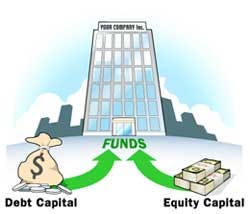
Under IAS 32, convertible loan note needs to be split into loan component and equity component (the detailed accounting treatment under IAS 32 is not covered in this post). Let's just say we have a convertible loan note of $100 and upon initial recognition, the entity has determined that
Loan element - $90
Equity element - $10
The double entry upon initial recognition is
Dr Bank $100
Cr Convertible loan note $90
Cr Equity component $10
As such, the CA of the convertible loan note (liability) is $90.
Tax treatment: Assuming that we do not split the loan into loan and equity component as per tax rule.
As such, TB will be $100.
As CA = $90 and TB = $100 and this is a liability, the difference of $10 represents TTD.
Notes:
1. The deferred tax liability arising on initial recognition (as explained above) is not charged to SOPL. Instead, it is charged directly to the equity component. Remember, the deferred tax treatment should follow the accounting treatment. Since in accounting we credit equity component $10, we have to charge the deferred tax to the equity component too.
2. On subsequent accounting, when we apply amortised cost method to the carrying amount of convertible loan note, the carrying amount of convertible loan note will be increased by finance cost and reduced by actual interest paid. The subsequent changes in deferred tax liability as a result of this will be charged to SOPL because the finance cost on convertible loan note is charged to SOPL.

Congratulations! You have reached the end of this post!
In my next post on IAS 12, I will talk about some specific scenarios relevant for SBR students. So stay tuned!
(b) If the liability represents an income received in advance, then the tax base is the carrying amount minus any revenue that is not taxable in the future (e.g. an income received in advance which is taxed in this year on receipt basis. This income will not be taxable in the future).
You will understand more after going through the following illustrations:
1. Trade Payables
The entity incurs an expense of $100 on credit. The accounting double entry is:
Dr Expenses (SOPL) $100
Cr Trade payables $100
In this case, the carrying amount of the liability is $100.
Tax treatment: Assuming that the tax rule provides that such expense is deductible on an accrual basis (i.e. deduction is given even though the entity has not paid for the expense).
The imaginary tax double entry in the imaginary tax financial statements will be:
Dr Deductible expenses $100
Cr Trade payables $100
As we can see from the above, the tax base of the liability is also $100 because $100 is deductible in this year.
Since the CA and TB are the same, there will be no deferred tax because the accounting rule and tax rule are the same.
Note: Referring back to the definition, as none of the $100 liability is deductible in the future (the full $100 has already been deducted in the current year), the tax base is equal to its carrying amount of $100.
2. Accrued Expenses Which Is Deducted on Cash Basis
An entity has accrued water and electricity expenses of $100 for the month of December. Such expense has not been paid by year end. The accounting double entry is:
Dr Expenses (SOPL) $100
Cr Accrued expenses $100
In this case, the carrying amount of the liability is $100.
Tax treatment: Assuming that tax rule provides that the deduction for such expenses can only be made when the entity has paid for the expenses.
As the entity has not paid for the expenses, there will be no tax double entry. Accordingly, it follows that there is no tax base because the expense is not deductible in this year.
As such, CA = $100 and TB = $0. As CA > TB and this is a liability, this represents a DTD of $100.
Reason for DTD: The entity will pay higher tax this year because deduction is not given this year. However, the entity will pay lesser tax in the future when deduction is given (hence DTD).
Note: Referring back to the definition, as the $100 liability will only be deducted in the future, the tax base is equal to its carrying amount ($100) less the amount that will be deductible in the future ($100). This will result in tax base to be equal to zero ($100 - $100).
3. Deferred Income Which Is Taxed on Cash / Receipt Basis
An entity receives $100 advance payment for services to be rendered in the future. As the performance obligation has not been satisfied, according to IFRS 15 Revenue from Contracts with Customers, revenue cannot be recognised. Instead, a deferred revenue (liability) should be recognised as follows:
Dr Bank $100
Cr Deferred revenue (liability) $100
In this case, the carrying amount of the liability is $100.
Tax treatment: Assuming that the tax rule mentions that the income will be taxed if the entity has received the income.
As the income is subject to tax in this year (since the entity has received the income), the imaginary tax double entry in the imaginary tax financial statements will be as follows:
Dr Bank $100
Cr Taxable income $100
In other words, in the tax SOFP, there will be no liability because the income has already been taxed this year. As such, tax base is equal to zero.
As CA = $100 and TB = 0 and this is a liability, there will be a DTD of $100 since CA > TB.
Reason for DTD: The entity will pay more tax in this year because the deferred income is subject to tax in this year. However, the entity need not pay tax again in the future (hence the future tax is lesser and it is DTD).
Note: Referring back to the definition, as the $100 income received in advance has already been taxed in this year, there will be no tax to be paid in the future. As such the tax base is the carrying amount ($100) less the revenue that will not be taxable in the future ($100). This will result in the tax base to be equal to $0 ($100 - $100).
4. Deferred Income Which Is Taxed in the Future
Assuming that the scenario is the same as scenario no.3 above, except that the tax treatment is that the income will not be taxed now, but it will only be taxed in the future when services are rendered.
In this case, the imaginary tax double entry in the imaginary tax financial statements will be similar to the accounting double entry:
Dr Bank $100
Cr Deferred revenue (liability) $100
As such, tax base of the liability is equal to $100 because we have not paid the tax.
As CA = $100 and TB = $100, it follows that there is no deferred tax. This is because the accounting rule and tax rule are the same.
Note: Referring back to the definition, as the $100 income received in advance will be taxed in the future, the tax base is the carrying amount ($100) less the revenue that will not be taxable in the future ($0). This will result in the tax base to be equal to $100 ($100 - $0).
5. Loan Payable
An entity borrowed $100 from the bank. The accounting double entry is as follows:
Dr Bank $100
Cr Loan payable $100
As such, the carrying amount of the liability is $100.
Tax treatment: When the entity receives the borrowing from the bank, there is no tax implication. When the entity makes repayment of loan to the bank, there is also no tax implication.
The imaginary tax double entry in the imaginary tax financial statements will be similar to the accounting double entry:
Dr Bank $100
Cr Loan payable $100
As the CA and TB are the same, it follows that there is no deferred tax. This is because the accounting rule and tax rule are the same.
Note: Referring back to the definition, as the $100 liability will not be deductible in the future, the tax base is equal to its carrying amount ($100) less the amount that will be deductible in the future ($0). This will result in tax base to be equal to $100 ($100 - $0).
6. Accrued Fines and Penalties
An entity accrues fines and penalties amounting to $100. The accounting double entry is as follows:
Dr Expenses (SOPL) $100
Cr Accrued fines and penalties $100
As such, the carrying amount of the liability is $100.
Tax treatment: Assuming that fines and penalties are not deductible for tax purposes.
The imaginary tax double entry in the imaginary tax financial statements will be similar to the accounting double entry:
Dr Non-deductible expenses $100
Cr Accrued fines and penalties $100
As such, the tax base of the liability is also $100.
As the CA and TB are the same, it follows that there is no deferred tax.
Note: Referring back to the definition, as the $100 liability will not be deductible in the future, the tax base is equal to its carrying amount ($100) less the amount that will be deductible in the future ($0). This will result in tax base to be equal to $100 ($100 - $0).
Alternatively, you can also argue that as fines and penalties are not deductible, the difference represents a permanent difference and deferred tax should be ignored. Both analysis will result in no deferred tax calculation.
There you go! This is the idea of how do we determine tax base for liability.
Next, I am going to cover about some specific scenarios involving the accounting standards in the Financial Reporting (FR) paper of ACCA.
Specific Scenarios
In this part, I will cover some scenarios involving the following:
1. Unutilised tax losses or unutilised tax credits
2. Leasing (IFRS 16)
3. Convertible loan note (IAS 32)
1. Unutilised Tax Losses / Unutilised Tax Credits
Unutilised tax losses (in Malaysia, this is known as unabsorbed business losses) refer to the tax losses that can be carried forward to the future so that it can be used to offset against taxable income that an entity will earn in the future. In other words, future tax can be reduced by these unutilised tax losses.
As the entity will pay lesser tax in the future, unutilised tax losses will result in deferred tax asset (DTA).
For example, if an entity is having unutilised tax losses of $100,000 and the tax rate is 25%, there will DTA of $25,000 ($100,000 x 25%).
However, do take note that paragraph 34 of IAS 12 mentions that such deferred tax asset can be recognised "to the extent that it is probable that future taxable profit will be available against which the unused tax losses and unused tax credits can be utilised."
In other words, using the same example as above, if the entity only expects that it can earn $70,000 taxable profit in the future, the entity can only recognise DTA of $21,000 ($50,000 x 25%) instead of the full $25,000 DTA.
The remaining DTA of $4,000 ($25,000 - $21,000) will not be recognised because the entity is not able to earn the extra $30,000. In other words, the entity will not be able to use the tax losses of $30,000 because the entity cannot earn the extra $30,000. As such, the DTA of $4,000 will only be disclosed in the notes to the financial statements.
2. Leasing

Under IFRS 16, a lessee (an entity who lease an asset) will recognise right-of-use asset as well as lease liability (the detailed accounting treatment under IFRS 16 is not covered in this post). Let's just say:
Right-of-use asset - $100
Lease liability - $90
Net CA of lease (asset) - $10
Tax treatment: Assuming that the tax rule provides that lease rental is treated as a deductible expense.
The imaginary tax double entry for the lease rental in the imaginary tax financial statements will be as follows:
Dr Deductible expenses $100
Cr Bank $100
As such, under the tax rule, there will be no asset because we just claim a deductible expense on lease rental. Tax base will be equal to zero.
As CA = 10 and TB = $0 and this is an asset, the difference of $10 represents TTD.
Reason for TTD: If there is a positive net asset of lease in the accounting SOFP, it means that there will be higher profit in the accounting SOPL (due to double entry). In other words, accounting profit is more than taxable profit for this year. As we only claim lease rental as deductible expenses for tax purpose, we will actually pay lesser income tax this year. In the future, our tax might be higher after we have claimed all the lease rental deduction (hence TTD).
Note: If the net CA of the lease is a liability, then the difference shall be DTD.
Reason for DTD: If there is a net liability of lease in the accounting SOFP, it means that there will be higher expenses (thus lower profit) in the accounting SOPL (due to double entry). In other words, accounting profit is lower than taxable profit for this year. We will pay more income tax in this year. In the future, our tax might be lower (hence DTD).
3. Convertible Loan Note (IAS 32)
Under IAS 32, convertible loan note needs to be split into loan component and equity component (the detailed accounting treatment under IAS 32 is not covered in this post). Let's just say we have a convertible loan note of $100 and upon initial recognition, the entity has determined that
Loan element - $90
Equity element - $10
The double entry upon initial recognition is
Dr Bank $100
Cr Convertible loan note $90
Cr Equity component $10
As such, the CA of the convertible loan note (liability) is $90.
Tax treatment: Assuming that we do not split the loan into loan and equity component as per tax rule.
As such, TB will be $100.
As CA = $90 and TB = $100 and this is a liability, the difference of $10 represents TTD.
Notes:
1. The deferred tax liability arising on initial recognition (as explained above) is not charged to SOPL. Instead, it is charged directly to the equity component. Remember, the deferred tax treatment should follow the accounting treatment. Since in accounting we credit equity component $10, we have to charge the deferred tax to the equity component too.
2. On subsequent accounting, when we apply amortised cost method to the carrying amount of convertible loan note, the carrying amount of convertible loan note will be increased by finance cost and reduced by actual interest paid. The subsequent changes in deferred tax liability as a result of this will be charged to SOPL because the finance cost on convertible loan note is charged to SOPL.
Congratulations! You have reached the end of this post!
In my next post on IAS 12, I will talk about some specific scenarios relevant for SBR students. So stay tuned!